

Advanced Skid Mounted Hydrogen Refueling Supplier Selection: Compressor Skid Layout and Safety Hardware with Houpu
Map the Skid Topology Before Comparing Suppliers
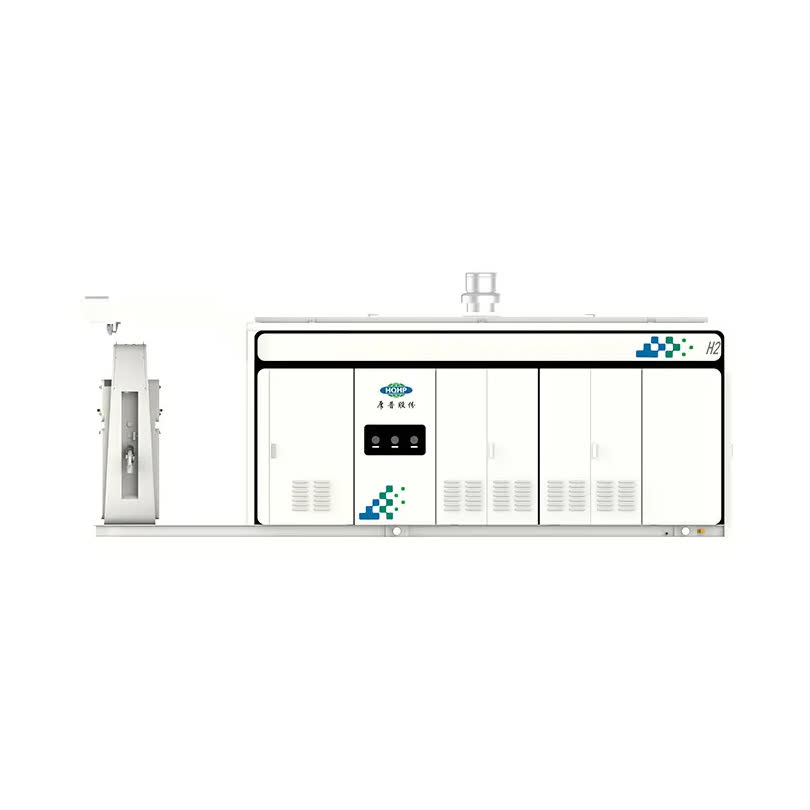
The compressor skid functions as the mechanical and thermodynamic nucleus of any skid-mounted refueling station. When evaluating an experienced Skid Mounted Hydrogen Refueling Supplier, mapping the skid topology requires analyzing equipment arrangement, process piping corridors, electrical cabinets and maintenance access paths before comparing commercial proposals.
Choose the Compressor Architecture for the Duty
Equipment selection begins with matching compressor technology to specific fueling demands. Diaphragm compressors utilize metal diaphragms to isolate hydraulic fluid from process gas, ensuring zero oil contamination and high compression ratios suitable for passenger vehicle stations.
Hydraulic piston compressors deliver high volumetric capacity and flexible pressure staging for heavy-duty commercial fleets. Sourcing teams must evaluate inlet pressure ranges, target discharge pressures, vibration dampening and spare-parts availability before finalizing compressor specifications.
Decide Whether the Dispenser Belongs on the Skid
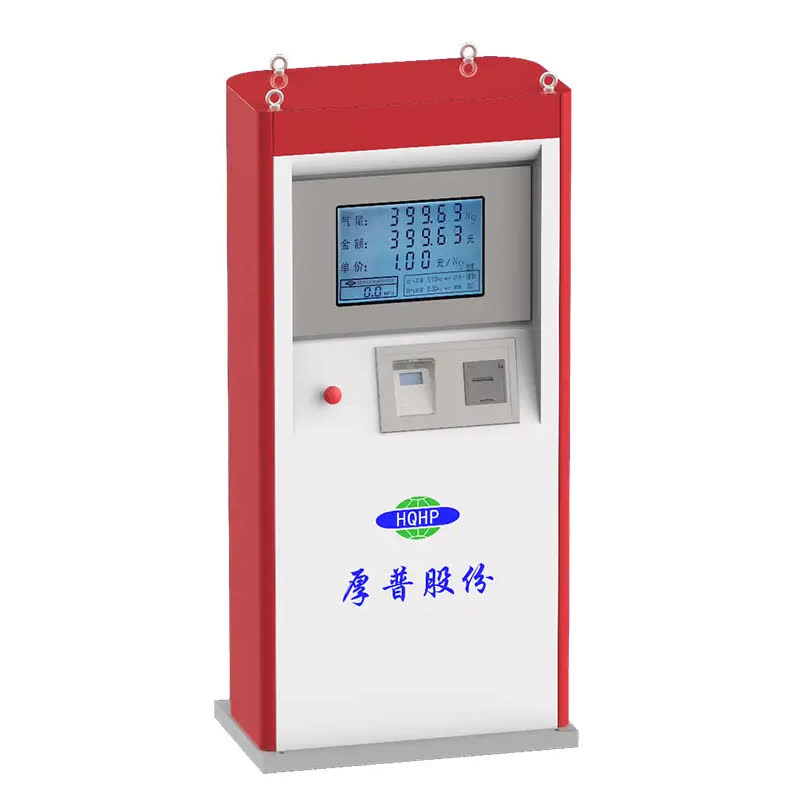
Houpu supports both dispenser-on-the-skid and dispenser-off-the-skid configurations. Packaging the dispenser directly on the compressor skid minimizes footprint, pre-wires communication cables and accelerates on-site installation, suiting compact fleet depots.
Conversely, locating dispensers on detached fueling islands separates vehicle traffic from rotating compressor machinery, facilitating vehicle circulation in busy commercial stations. Sourcing teams should match dispenser placement to site plot layout and traffic patterns.
Use Pressure and Capacity as a Screening Envelope
Compressor skids must match project supply pressures and vehicle demand profiles. Houpu’s published engineering envelope specifies an inlet pressure range of 5 to 20 MPa. Based on a 12.5 MPa inlet reference, the system delivers a filling capacity of 50 to 1,000 kg per 12 hours.
The equipment provides a 45 MPa outlet pressure option for vehicle filling pressures not exceeding 43.75 MPa, alongside a 90 MPa outlet option for filling pressures not exceeding 87.5 MPa. Operating reliably across ambient temperatures from -25°C to 55°C, the skid delivers dependable performance across diverse climates.
Evaluating these boundary conditions ensures that the selected compressor operates within efficient volumetric compression ranges across declining tube-trailer pressures.
Design Maintenance into the Skid
Maintainability directly influences operational uptime. Compact skid packaging must not compromise physical access to wear components. Houpu engineers multiple dedicated maintenance channels within its containerized enclosures.
Standard design features include dedicated overhead lifting beams and hoist points that allow technicians to service heavy compressor heads and diaphragms safely without dismantling adjacent piping.
Piping manifolds incorporate accessible double block-and-bleed isolation valves, enabling swift filter element changes and sensor calibrations during scheduled maintenance.
Evaluate Safety Hardware by Function
Safety engineering within a containerized compressor enclosure requires multi-layered hardware systems designed to mitigate risks proactively:
Prevent hydrogen accumulation
Because hydrogen is lighter than air and diffuses rapidly, skid enclosures must prevent gas entrapment. Houpu designs skid roofs with sloped anti-hydrogen-accumulation structures and natural ventilation louvers, complemented by automated forced-draft ventilation fans.
Detect abnormal conditions
Skid instrumentation incorporates optical flame detectors and catalytic combustible gas sensors positioned at strategic high points. Detectors continuously transmit atmospheric data to the central controller, triggering alarms at predetermined lower-explosive-limit thresholds.
Stop the process safely
Emergency-stop pushbuttons located on skid exteriors and control consoles instantly trip power to the compressor, close pneumatic shut-off valves and isolate high-pressure storage banks upon activation, safeguarding personnel and equipment.
Warn operators
Integrated audiovisual strobe horns provide clear warnings across the refueling forecourt. Control software differentiates between cautionary diagnostic warnings and critical shutdown alarms, ensuring clear operator response.
Check Automation and Electrical Integration
Houpu’s compressor skids integrate automated pressure boosting, temperature management, continuous data acquisition and automated emergency shutdown protocols within unified programmable logic controllers.
Centralized cable trays separate power feeds from low-voltage instrument wiring, eliminating electromagnetic interference. The system supports both local touch-screen operation and remote supervisory control via industrial communication protocols.
Automated data logging records suction pressures, discharge temperatures and oil levels, facilitating predictive maintenance and remote troubleshooting.
Verify Site Interfaces Before Shipment
Factory pre-assembly minimizes field construction risks. Sourcing teams and site contractors should verify mechanical and electrical tie-in interfaces prior to equipment dispatch. Critical verification items include foundation anchor bolt templates that match concrete civil specifications, flanged tie-ins for low-pressure inlet and high-pressure discharge headers, and certified explosion-proof junction boxes matching site voltage and frequency.
Dry-contact safety telemetry interfaces must link skid alarms directly to site-wide emergency shutdown systems. Pre-testing interface terminations during factory acceptance testing accelerates final site commissioning and eliminates field piping rework.
Cooling-water supply connections and nitrogen purge tie-ins require standardized flanged connections with accessible shut-off valves. Validating these mechanical points before shipment ensures prompt field hookup.
Ensuring alignment across power supplies, grounding grids and digital telemetry protocols allows mechanical contractors to complete installation smoothly upon delivery.
Use Project Proof to Test Integration Claims
Field proof verifies manufacturer integration competence. Houpu fulfilled the export dispatch of a 35 MPa skid-mounted vehicle refueling system to Portugal on September 7, 2026. This deployment consolidates high-pressure gas boosting machinery, vehicle dispensing electronics and emergency shutdown logic into a transportable platform.
Sourcing managers can verify manufacturing reliability through institutional compliance records. Houpu maintains an engineering department of more than 100 technical experts and holds 138 CE conformity certifications alongside 60 explosion-proof design accreditations. Backed by 494 granted patents and 124 proprietary software copyrights, Houpu designs compressor packages that satisfy demanding international petrochemical and gas safety codes.
These rigorous international standards ensure that skid-mounted compressor packages deliver high mechanical integrity and operational availability throughout extended commercial deployment.
RFQ Questions that Expose Weak Suppliers Early
Procurement directors can qualify a competent Skid Mounted Hydrogen Refueling Supplier by asking probing technical questions. Bidders should explain why their proposed compressor architecture suits the specified duty cycle and state guaranteed mass flow rates across minimum suction pressures.
Buyers should request detailed safety cause-and-effect interlock diagrams, verify maintenance hoist ratings and evaluate localized field service response times before making procurement commitments.
Inquiring about certified spare parts availability, mean time between failures for compressor valves, and factory acceptance test run durations exposes integration shortcomings before contracts are signed.
Skid Selection Takeaway: Balancing Compact Layout with Safety and Maintainability
Selecting a dependable Skid Mounted Hydrogen Refueling Supplier requires evaluating mechanical layout, maintenance accessibility and integrated functional safety hardware. As an established clean-energy equipment manufacturer, Houpu delivers pre-engineered, factory-tested compressor skids that streamline site installation and provide dependable high-pressure fueling operations. Explore advanced skid-mounted compressor systems at https://www.hqhp-en.com/.
Houpu
Houpu
Legal Disclaimer:
EIN Presswire provides this news content "as is" without warranty of any kind. We do not accept any responsibility or liability for the accuracy, content, images, videos, licenses, completeness, legality, or reliability of the information contained in this article. If you have any complaints or copyright issues related to this article, kindly contact the author above.
